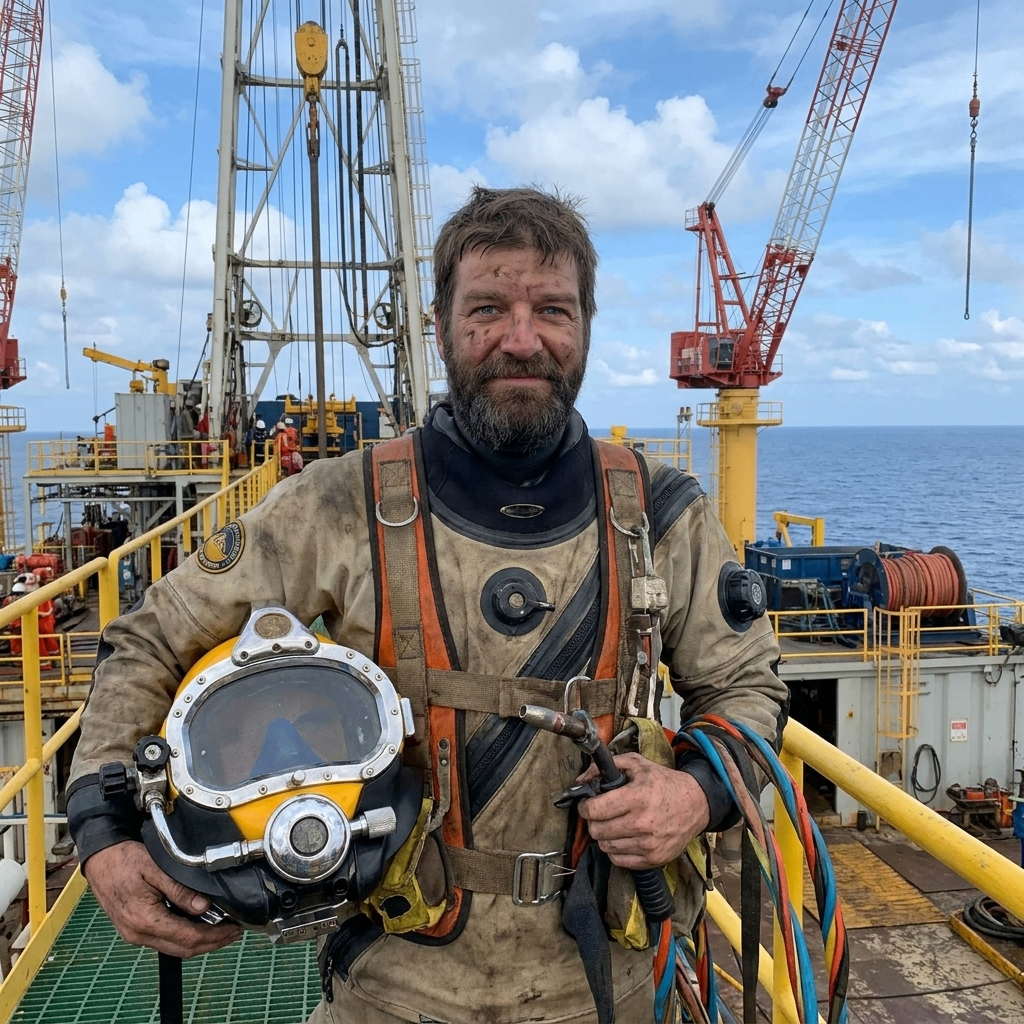
North Sea · 9 min read
The Day The Bell Stopped
A bell stuck at 180m, a crew running through every procedure, and the long quiet on the other end of the umbilical.
“You don't panic. You don't pray. You work the problem.”
The descent
It was a routine bell run. Two hundred and twenty metres, three hour bottom time, two divers locked out and one on standby. The conditions were good — flat surface, slack tide, a competent supervisor on comms. I've made thousands of dives that started exactly like that one.
When the winch stopped
Halfway back up, the winch stopped. Not slowed — stopped. The bell came to a dead hang at 180m, and the umbilical went quiet on the topside end while they worked the problem. Inside the bell we heard the small mechanical silence that tells you something on the surface has failed.
“You don't panic. You don't pray. You work the problem.”
The long quiet
For nineteen minutes the bell hung in the dark. We ran our checks, we kept the divers warm, we waited. When the comms crackled back, the supervisor's voice was the same as it had been on the way down — flat, professional, completely under control. That is what training is for.
Hands that remembered
Training takes over when thought fails. My hands knew the umbilical, the manifold, the gas panel before my mind caught up. We rehearsed the failure a hundred times on the surface so that, in the dark, the body could move without permission.
“In the dark, the body moves without permission.”
Coming up
Decompression is its own kind of patience. Hours pass watching the depth gauge inch upward, listening to the bell hum, thinking about everyone above who waited. When the hatch finally opened to daylight, no one spoke for a long time. Some things you only debrief years later, if at all.